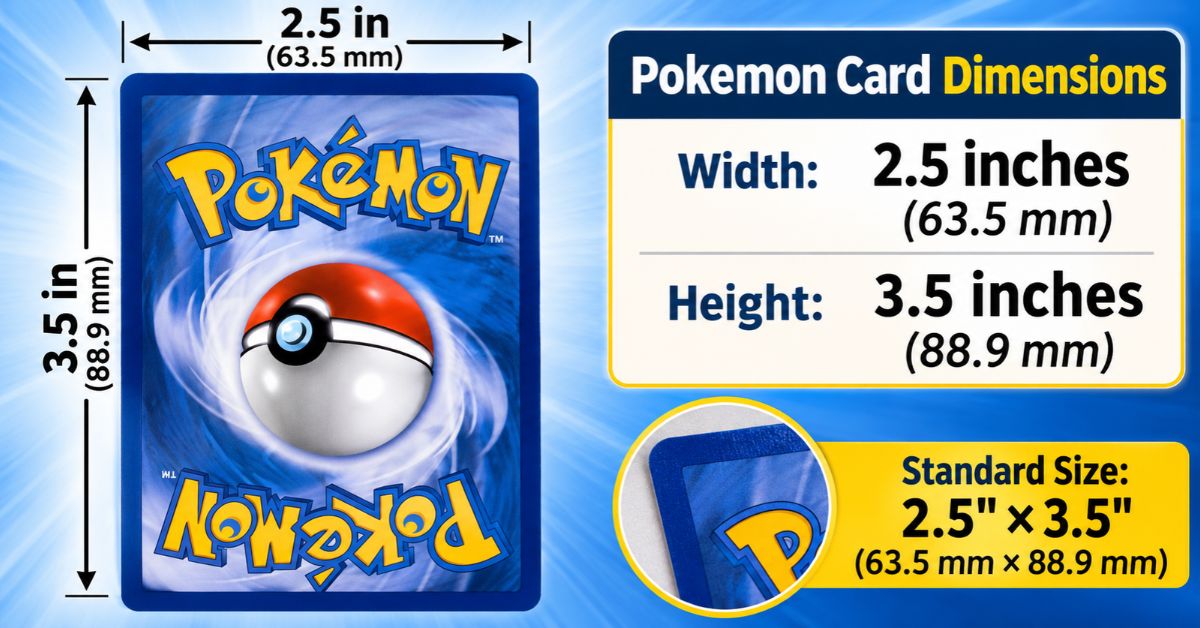
Pokémon Card Dimensions are simple: every standard card measures 2.5 inches by 3.5 inches, or 63.5 mm by 88.9 mm. That is the same poker-card footprint the game has used since 1996. Whether you collect, trade, or build decks, this size decides which sleeves, binders, and toploaders you need. Getting it right protects your cards and saves you money on gear that does not fit.
This guide covers the exact measurements in inches and millimeters, plus thickness, weight, and corner radius. You will also learn whether Japanese and English cards differ, which sleeve and toploader sizes fit best, and how to measure a card at home. Each section gives you a clear number or a quick checklist, so you can find what you need and get back to your collection.
Pokemon Card Dimensions in Inches and Millimeters
A standard Pokémon card measures exactly 2.5 inches wide and 3.5 inches tall. In metric, that equals 63.5 mm by 88.9 mm. Manufacturers often round those numbers to 63 mm by 88 mm, which is why sleeve packaging sometimes shows slightly different figures. The aspect ratio is 5:7, which matches the “poker size” format most people know from playing cards.
This size has not changed since the franchise launched in 1996. Base Set cards from the 1990s match the cards you pull from booster packs today. That consistency makes the hobby easier. You can store a vintage Charizard and a brand-new pull on the same binder page, and the same sleeves will fit both without any guesswork.
| Measurement | Inches | Millimeters |
|---|---|---|
| Width | 2.5 in | 63.5 mm |
| Height | 3.5 in | 88.9 mm |
| Rounded (manufacturer) | n/a | 63 x 88 mm |
| Aspect ratio | 5:7 | 5:7 |
Thickness, Weight, and Corner Radius
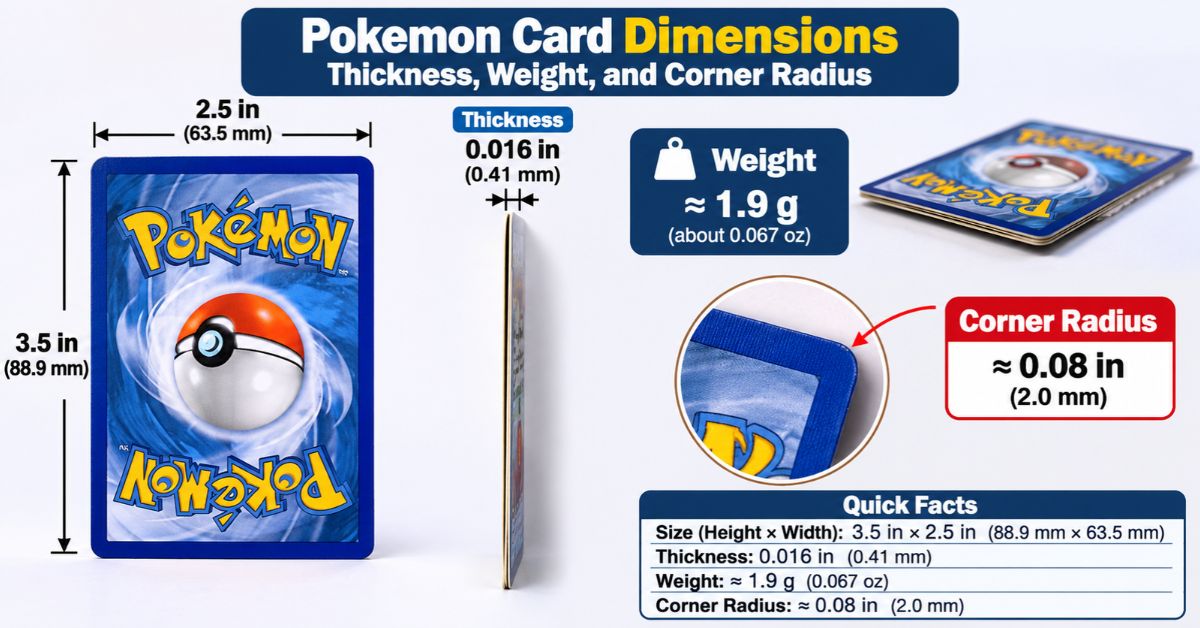
Size is only part of the picture. A standard card is about 0.3 mm to 0.32 mm thick, which card protection brands label as 35pt. Holographic, textured, and ultra-rare cards can reach about 0.35 mm because they use extra layers. That small gap matters when you pick a rigid holder, so check thickness before you buy.
Weight and corners matter too. Most cards weigh about 1.70 to 1.80 grams. The corners use a radius of 0.125 inches, or 3.175 mm, which gives them a gently rounded look. Graders and buyers inspect those corners closely for whitening. Knowing the radius also helps you spot trimmed or altered cards.
Here are the key specs at a glance:
- Thickness: 0.3 to 0.32 mm (35pt), up to 0.35 mm for foil or textured cards
- Weight: about 1.70 to 1.80 grams
- Corner radius: 0.125 inches (3.175 mm)
- Aspect ratio: 5:7
Are Japanese and English Pokémon Cards the Same Size?
Yes. A popular hobby myth says Japanese cards run smaller than English ones, but the physical dimensions are identical. Both measure 2.5 by 3.5 inches. The myth likely grew from differences in layout, borders, and sleeve labeling between regions. Those differences can make one card look slightly different at a glance, even though the size is the same.
That means you can mix Japanese and English cards in the same binder, deck box, or toploader. A sleeve rated for 64 mm by 89 mm fits either language. If a seller claims you need a special sleeve for Japanese cards, check the listed measurements first. The numbers will tell you what actually fits.
| Feature | English Cards | Japanese Cards |
|---|---|---|
| Width | 2.5 in (63.5 mm) | 2.5 in (63.5 mm) |
| Height | 3.5 in (88.9 mm) | 3.5 in (88.9 mm) |
| Thickness | 0.3 to 0.32 mm | 0.3 to 0.32 mm |
| Fits 35pt toploader | Yes | Yes |
Sleeve, Toploader, and Case Sizes for Pokémon Cards
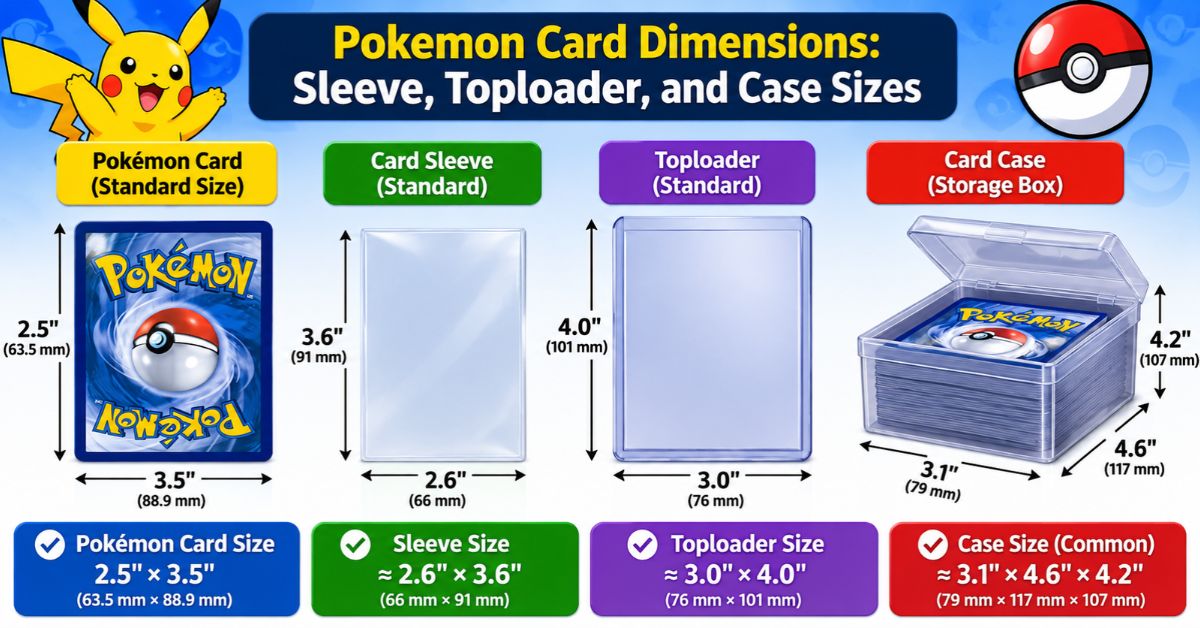
Perfect-fit inner sleeves measure 64 mm by 89 mm. They hug the bare card and keep out dust and moisture. Standard outer sleeves, often called penny sleeves, measure 66 mm by 91 mm. They work well for casual deck building. For valuable cards, slip an outer sleeve over an inner sleeve to get double protection.
Choose a 35pt toploader for standard cards. Step up to 75pt or 130pt only for thick, textured, or memorabilia cards. A holder that is too large lets the card shift and risk edge damage, while one that is too small can bend it. Match the holder to the card, not to the price tag or brand name.
| Accessory | Size | Best For |
|---|---|---|
| Inner (perfect-fit) sleeve | 64 x 89 mm | Bare cards, dust and moisture protection |
| Outer (penny) sleeve | 66 x 91 mm | Deck building, double sleeving |
| Standard toploader | 35pt | Regular cards |
| Thick toploader | 75pt or 130pt | Textured or memorabilia cards |
Use this checklist before you buy:
- Confirm the sleeve size in millimeters, not just the brand label.
- Pick perfect-fit sleeves for long-term storage.
- Choose 35pt toploaders for standard cards.
- Buy 75pt or 130pt holders only for thicker cards.
- Double sleeve your most valuable pulls.
How to Measure a Pokémon Card at Home
You rarely need to measure a standard card, but it helps when you suspect a counterfeit or a trimmed edge. Fakes sometimes miss the exact size or feel thicker or thinner. Measuring also confirms that a new sleeve or case fits before you load your best cards. A simple ruler works, though digital calipers give you better precision.
- Place the card on a flat, clean surface.
- Line up one short edge with the zero mark on your ruler.
- Read the width, then rotate the card and read the height.
- Check thickness with calipers if you have them.
Compare your numbers to the specs above. Differences under half a millimeter can come from the ruler or from rounding. Bigger gaps deserve a closer look. Check thickness, corner radius, and print quality too. Dimensions alone cannot prove a card is real, so use them as one clue among several, and ask an experienced collector if doubt remains.
Conclusion
Pokemon Card Dimensions stay the same across every era and language: 2.5 by 3.5 inches, or 63.5 by 88.9 mm. Thickness runs about 0.3 to 0.32 mm, weight sits near 1.70 to 1.80 grams, and corners have a 0.125-inch radius. Japanese and English cards match exactly, so the myth about different sizes is just that, a myth. These facts give you a reliable baseline for every card you own.
Put those numbers to work when you shop. Pair 64 x 89 mm inner sleeves with 35pt toploaders for standard cards, and move up to 75pt or 130pt only for thick or textured pieces. Add an outer sleeve for your most valuable pulls. With the right sizes in hand, you can protect your collection with confidence and avoid paying for gear that does not fit.