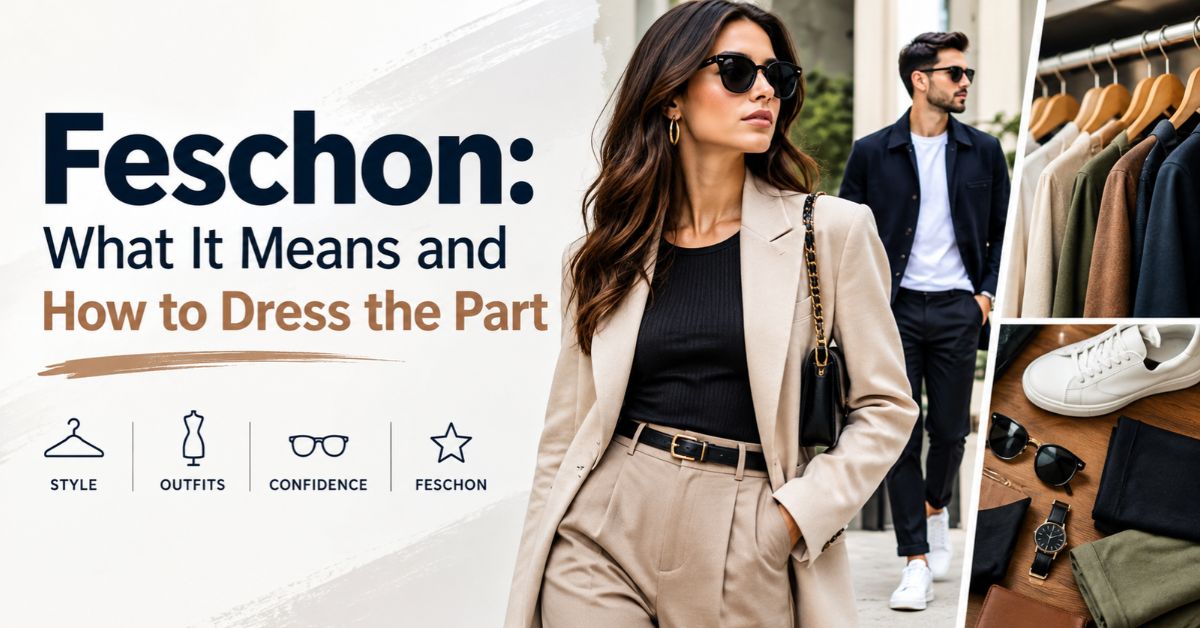
You may have seen the word Feschon online and wondered what it means. In short, it is a playful spelling of “fashion” that stands for dressing as personal expression. This guide explains the idea, shows how it differs from trend-chasing, and walks you through building a wardrobe that fits your life. It also clears up a name mix-up with a home appliance brand.
What does feschon mean?
Feschon is an informal, phonetic spin on the word “fashion.” People use it online to describe clothing choices that start with the wearer, not the retail calendar. Instead of asking, “What’s trending this season?” this mindset asks, “What fits my life, my body, and my mood?” It treats getting dressed as a form of personal expression rather than a race to keep up.
The term is still new and loosely defined. There is no official rulebook and no single look. Someone in a vintage denim jacket and someone in tailored linen can both dress this way. What matters is intention. You choose each piece because you like it, feel good in it, and will wear it often. Confidence, comfort, and habit guide the closet.
The core principles of feschon style
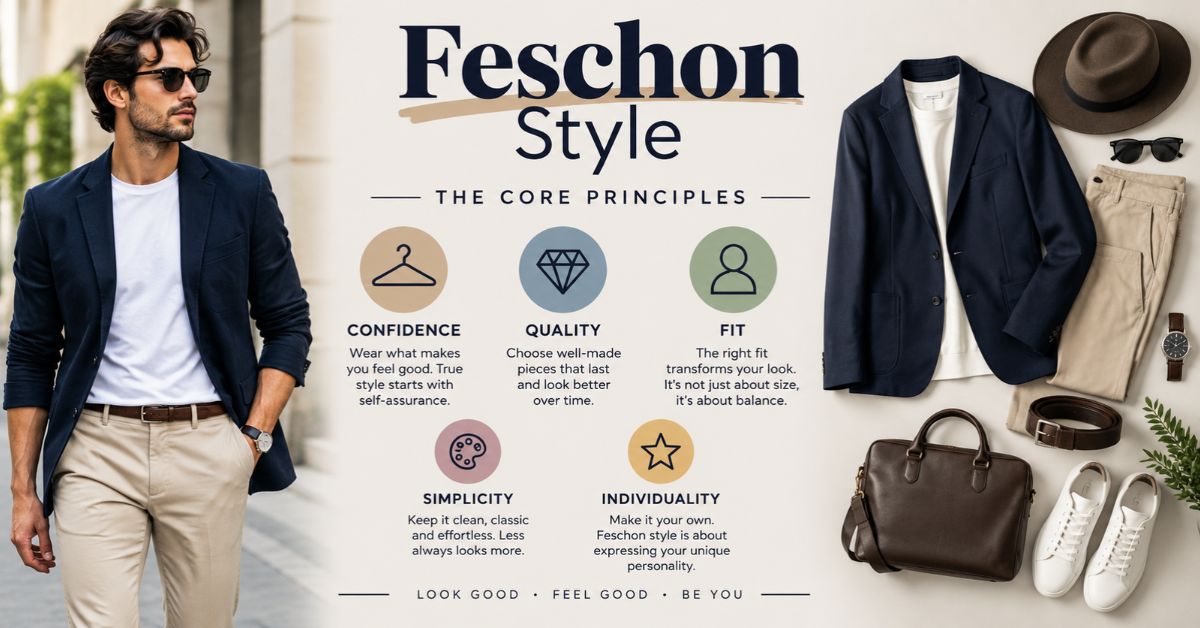
Four ideas shape this approach. First, personal expression comes before trends. Second, comfort counts as much as looks. Third, you buy fewer, better pieces that last. Fourth, you wear clothes with confidence instead of apology. These ideas sound simple, yet they truly change how you shop. They also change how you feel when you open your closet every single morning.
Think of it as dressing from the inside out. A trend-driven shopper starts with the store window. A mindful shopper starts with real life: the commute, the weekend plans, the fabrics that feel right on the skin. That shift makes your wardrobe more useful and your spending more thoughtful. It also supports sustainable fashion, because clothes you love tend to stay out of the landfill.
Here is the idea in short:
- Dress for who you are, not who the algorithm says you should be.
- Choose comfort and fit first.
- Build a timeless wardrobe, not a pile of one-season pieces.
- Wear every outfit with intention.
Trend-chasing fashion vs. personal style
Trend-led fashion moves fast. Collections change every few weeks, and social media pushes the next “must-have” before the last one wears out. That cycle can leave you with full closets and nothing to wear. The personal-style approach slows the pace. You still enjoy new styles, but you carefully filter them through your own taste, budget, and daily routine before you buy.
This does not mean you must avoid trends. A style-first dresser can wear a trending color if it suits their skin tone and closet. The difference is the reason behind the choice. Trends become an option, not an order. The table below shows how the two mindsets compare in everyday decisions, from shopping habits to how long you keep a piece.
| Factor | Trend-chasing | Personal style |
|---|---|---|
| Starting point | What’s popular now | What fits your life |
| Shopping pace | Frequent, impulsive | Slow, planned |
| Buying focus | Newness and hype | Fit, fabric, versatility |
| Typical result | Full closet, few favorites | Smaller closet, many favorites |
| Confidence source | Approval from others | Your own comfort |
| Sustainability | Often higher turnover | Fewer, longer-lasting pieces |
How to build a feschon-style wardrobe
You do not need to toss your closet and start over. Begin with what you already own. Pull out the pieces you wear most and the ones that make you feel like yourself. Those items reveal your real style. Then look at what is missing. A clear picture of your habits keeps you from buying duplicates or impulse pieces you never wear.
Step-by-step plan
- Empty one section of your closet and sort by “wear often,” “wear sometimes,” and “never wear.”
- Write down why you love your top five pieces. Look for patterns in color, cut, and fabric.
- List the gaps, such as shoes for rainy days or a layer for cold offices.
- Set a small budget and buy one item at a time.
- Wear it a few times before adding anything else.
Real-life example
Imagine Maya, a teacher who commutes by bike. Her audit shows she wears soft knits, dark jeans, and sneakers five days a week. She skips stiff blazers. So she adds two sturdy cardigans and one pair of better-fitting jeans, then stops buying office-style pieces she never reaches for. Her closet shrinks, yet her outfits improve, and her mornings get much easier.
Your wardrobe checklist and timeless staples
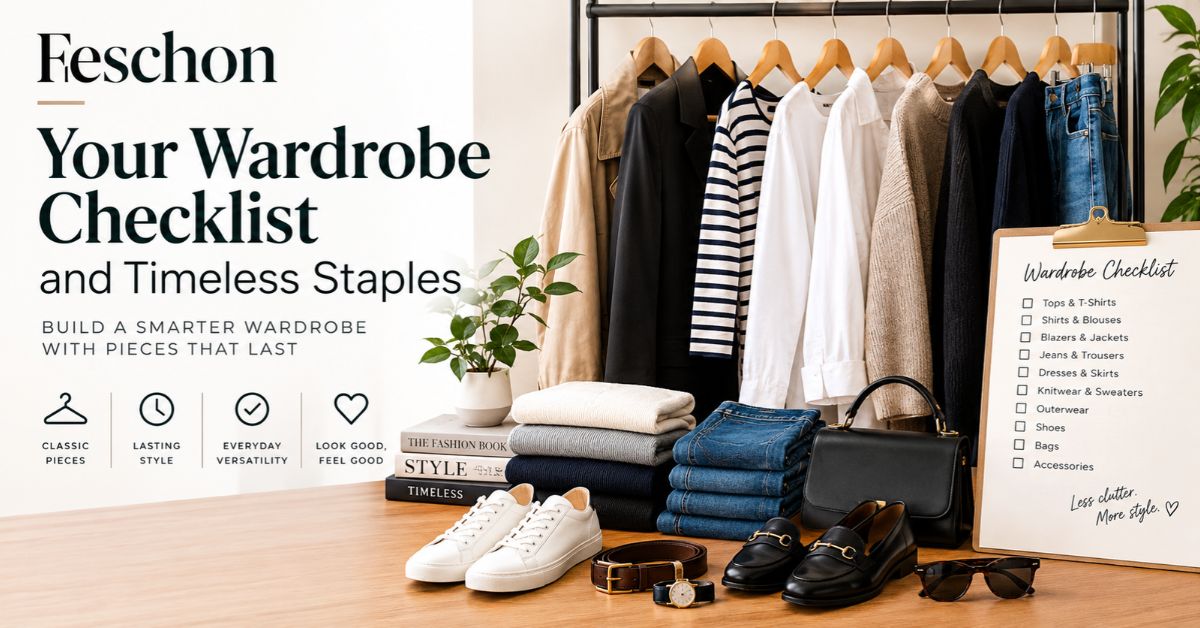
Use a checklist to keep purchases honest. Before you buy anything, run it through a few quick questions. These take less than a minute. They protect your budget and your closet space. Think of it as a gentle gatekeeper for your wardrobe, not a strict rule. Over time, the habit becomes automatic, and you will notice fewer regrets, fewer returns, and more outfits you actually enjoy wearing.
Staples give your wardrobe a backbone, but yours may differ from anyone else’s. Every closet has its own mix of favorites. A quality white tee suits one person, while another lives in button-down shirts. The table below offers a starting point, not a rulebook. Swap items freely based on climate, job, and taste. A personal wardrobe reflects the person wearing it, not a template.
| Category | Example staple | Why it works |
|---|---|---|
| Tops | Plain tee or oxford shirt | Pairs with almost anything |
| Bottoms | Well-fitting jeans or trousers | Handles work and weekends |
| Layers | Cardigan or denim jacket | Adapts to weather swings |
| Shoes | Clean sneakers or boots | Comfortable and versatile |
| Accent | Scarf, watch, or hat | Adds personality cheaply |
The FESCHON appliance brand: avoid the mix-up
Not every search for this term is about clothing. The name also appears as a brand for home appliances, especially multi-stage reverse osmosis (RO) water purifiers. Listings for these products commonly mention UV and UF filtration along with copper and zinc alkalizers. If you landed here looking for a purifier, the fashion discussion above is a different topic entirely. Those two meanings share a name and nothing else.
Always verify product details before you buy. Check the seller, warranty terms, and whether the unit suits your water source. Availability also varies by country, and the brand’s main listings appear to be on Amazon India. U.S. shoppers should confirm shipping, voltage, and service support first. Testing your water beforehand helps you pick the right filtration stages. Reading recent customer reviews also reveals how the product performs over time.
Conclusion
Feschon puts you, not the trend cycle, in charge of your closet. It asks you to dress for your habits, your comfort, and your confidence. Start with an audit, shop with a checklist, and build a timeless wardrobe slowly. If you came looking for the appliance brand, check seller details and local availability first. Either way, choose with intention, and the results will follow.