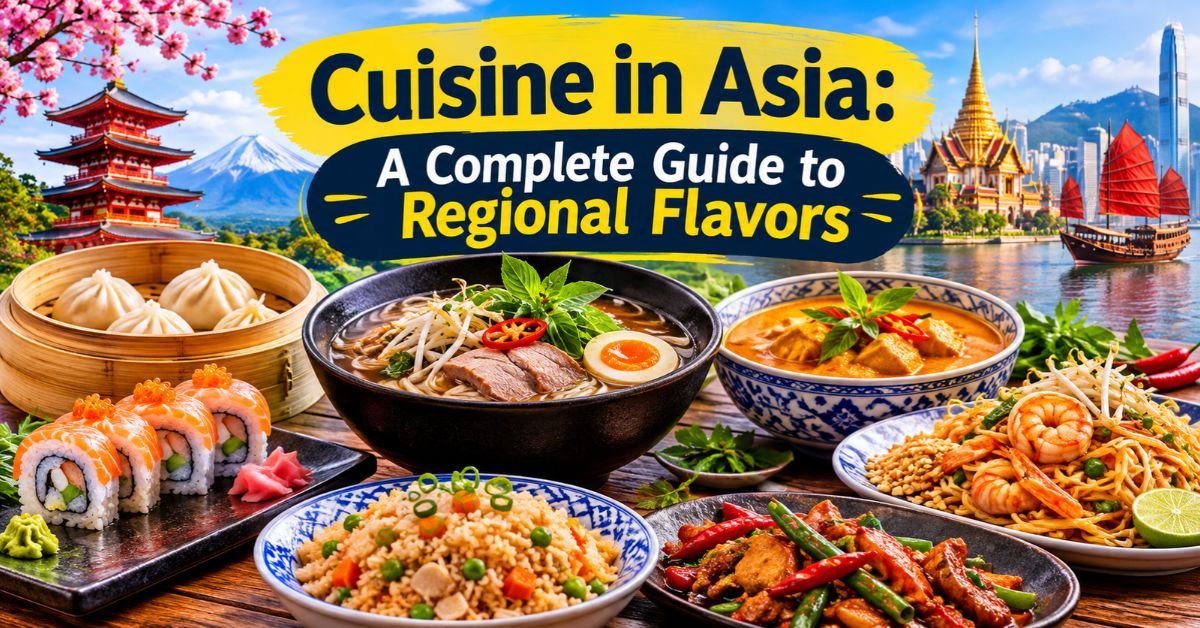
Cuisine in Asia is a diverse tapestry of flavors, ingredients, and cooking techniques shaped by geography and history. Rice anchors most meals, yet the continent’s food ranges from the spice-rich curries of South Asia to the delicate, umami-focused dishes of East Asia. This guide walks you through four major regions, their signature flavors, and their iconic dishes. You will also learn how to start cooking and eating them with confidence.
Use the table below as a quick map before you dive into each region.
| Region | Flavor Profile | Core Staples and Aromatics | Iconic Dishes |
|---|---|---|---|
| East Asia (China, Japan, Korea) | Umami, savory, sweet, sometimes numbing-spicy | Rice, noodles, soy sauce, miso, ginger, fermented pastes | Sushi, ramen, Peking duck, dim sum, kimchi, bibimbap |
| Southeast Asia (Thailand, Vietnam, Indonesia) | Sweet, sour, salty, and fiery | Fish sauce, lemongrass, galangal, coconut milk, chili | Pad Thai, tom yum, pho, banh mi, nasi goreng, satay |
| South Asia (India, Pakistan, Bangladesh) | Aromatic, robust, deeply spiced | Ghee, lentils, flatbreads, masala blends | Biryani, butter chicken, tandoori naan, hilsa fish curry |
| West and Central Asia (Turkey, Iran, Uzbekistan) | Earthy, herbaceous, savory | Wheat flatbreads, lamb, yogurt, olive oil, saffron | Kebabs, shawarma, plov, manti |
East Asian Flavors: China, Japan, and Korea
East Asia builds flavor around umami, savory depth, and gentle sweetness. Soy sauce, miso, ginger, and fermented pastes sit in nearly every kitchen, alongside rice and noodles. Cooks in China, Japan, and Korea use these staples differently, though. Chinese cooking leans on high-heat wok work and occasional numbing spice. Japanese dishes favor restraint and clean broths. Korean meals pack a bold, fermented punch.
Each country offers signature dishes worth knowing. Japan gives us sushi and ramen. China is famous for Peking duck and dim sum. Korea shines with kimchi and bibimbap. If you are new to Cuisine in Asia, start with a noodle soup or rice bowl. Both teach you how balanced seasoning and fresh toppings work together in one simple, satisfying meal.
Southeast Asian Cuisine: Sweet, Sour, Salty, and Spicy
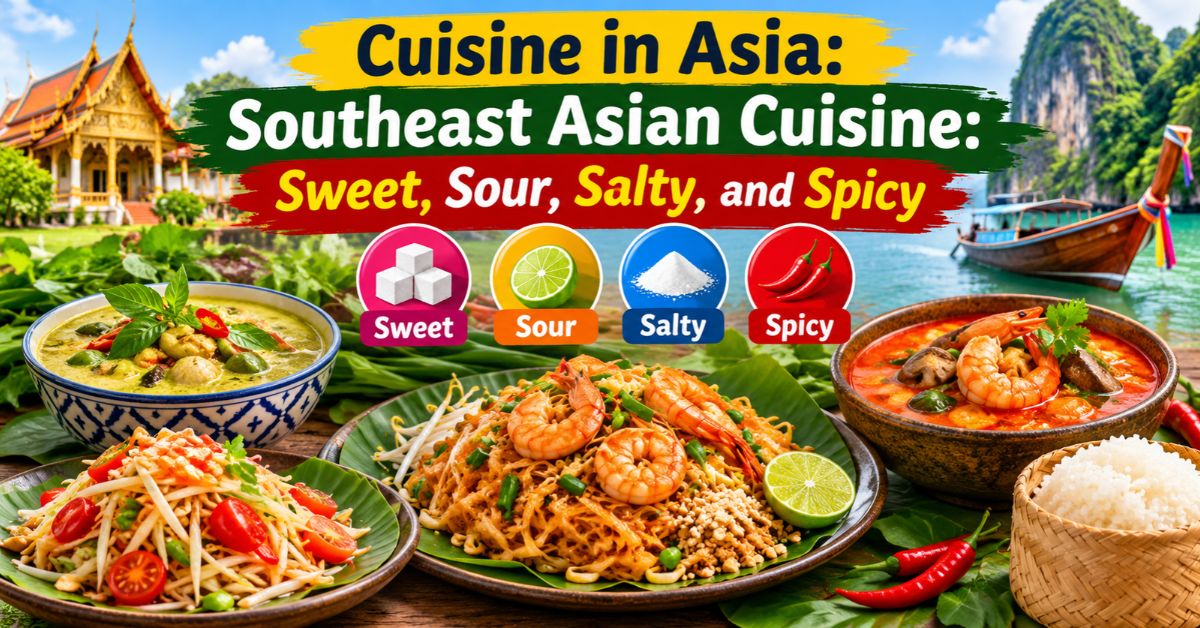
Southeast Asian cooking chases balance. Cooks aim for sweet, sour, salty, and fiery heat in a single bite. Fish sauce, lemongrass, galangal, coconut milk, and chili form the backbone of most recipes, while fresh herbs add brightness on top. The result tastes vibrant rather than heavy, which explains why these dishes travel so well and adapt easily to home kitchens.
Thailand brings Pad Thai and tom yum. Vietnam offers pho and banh mi, two dishes that blend French influence with local herbs. Indonesia contributes nasi goreng and satay, both rich with sweet soy and spice. Each dish shows the same goal: contrast. A squeeze of lime, a spoonful of sugar, or a pinch of chili can transform the whole plate.
South Asian Food: Spice, Ghee, and Slow Cooking
South Asian food is intensely aromatic and deeply spiced. Cooks build layers with ghee, lentils, flatbreads, and complex masala blends that often include cumin, coriander, turmeric, and cardamom. Spices are toasted, bloomed in hot fat, or ground fresh to release maximum aroma. That patient technique gives curries their depth, and it explains why many dishes taste even better the next day.
Biryani is the region’s showpiece, loved in both Pakistan and India. Butter chicken and tandoori naan represent North Indian comfort. In Bangladesh, hilsa fish curry highlights river-based cooking with mustard and chili. Vegetarian options abound as well, especially dal and flatbread meals. For an easy entry point, order dal with naan or basmati rice, then work up to richer curries.
West and Central Asian Dishes: Kebabs, Plov, and Manti
West and Central Asian cooking feels earthy, herbaceous, and meat-centric. Lamb features heavily, usually grilled, roasted, or slow-cooked. Wheat flatbreads accompany almost every meal, while yogurt, olive oil, and saffron add richness and color. Spice use stays moderate compared with South Asia, so the focus lands on quality ingredients, smoke, and fresh herbs. This style rewards simple technique.
Kebabs and shawarma dominate street corners across Turkey and the Levant. Uzbekistan’s national pride is plov, a pilaf of rice, carrots, and lamb cooked in one large pot. Manti, small dumplings often topped with yogurt, travel across Central Asia. These dishes show how trade routes shaped the region, carrying grains, spices, and cooking methods between East and West for centuries.
Three Culinary Pillars That Define Asian Cooking
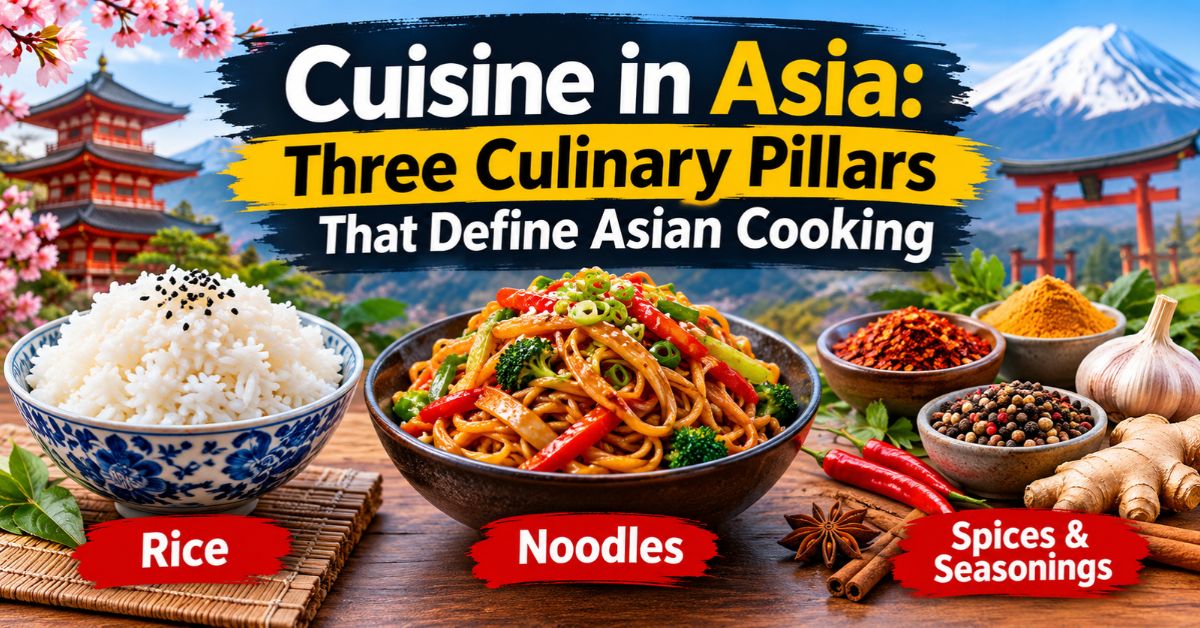
Rice unites Cuisine in Asia, yet each region treats it differently. East Asia prefers short-grain or sticky rice, which clumps nicely for chopsticks. Southeast Asia relies on aromatic jasmine and glutinous varieties. South Asia favors long, slender, fragrant basmati. Matching the right rice to a dish changes texture dramatically, so it deserves as much attention as the main ingredient.
| Rice Type | Region | Texture | Best For |
|---|---|---|---|
| Short-grain or sticky | East Asia | Soft and clingy | Sushi, bibimbap |
| Jasmine | Southeast Asia | Fragrant and tender | Stir-fries, curries |
| Glutinous | Southeast Asia | Chewy and sticky | Desserts, grilled meats |
| Basmati | South Asia | Long and fluffy | Biryani, pilaf |
Fermentation builds deep savory flavor across the continent. Fish sauce adds liquid umami in Vietnam and coastal Southeast Asia, while gochujang and miso bring thick, soybean-based richness to Korea and Japan. Street food then carries these flavors into daily life. Night markets and hawker centers serve Singapore’s chilli crab, Malaysia’s roti canai, and Hong Kong’s street-side dim sum, turning dinner into a social ritual.
How to Start Exploring Asian Food at Home
You do not need a plane ticket to explore Asian food. A few smart pantry choices and one region at a time make it manageable. Pick a cuisine, stock its core ingredients, and cook one simple dish. Repeat the process with a new region each month. Soon you will recognize flavor patterns instead of memorizing recipes, and you will shop with confidence.
Local restaurants and Asian grocery stores help too. Ask staff what they eat themselves, and try regional specialties instead of only familiar takeout. Many U.S. cities have thriving Thai, Korean, Indian, and Uzbek communities. Visiting them teaches you more than any cookbook, and it supports family-run businesses.
Conclusion
Cuisine in Asia offers far more than a single flavor. East Asia delivers umami depth through soy sauce, miso, and fermented pastes. Southeast Asia balances sweet, sour, salty, and fiery heat in every bite. South Asia builds layers of aromatic spice, while West and Central Asia celebrates lamb, flatbread, yogurt, and saffron. Rice, fermentation, and street food tie these regions together across the continent.
You do not need to master everything at once. Pick one region, stock a few core ingredients, and cook a simple dish this week. Notice how each cuisine balances flavor, then try another. Over time, you will recognize patterns that make every menu easier to read. Keep exploring Cuisine in Asia, and your pantry and palate will grow together.