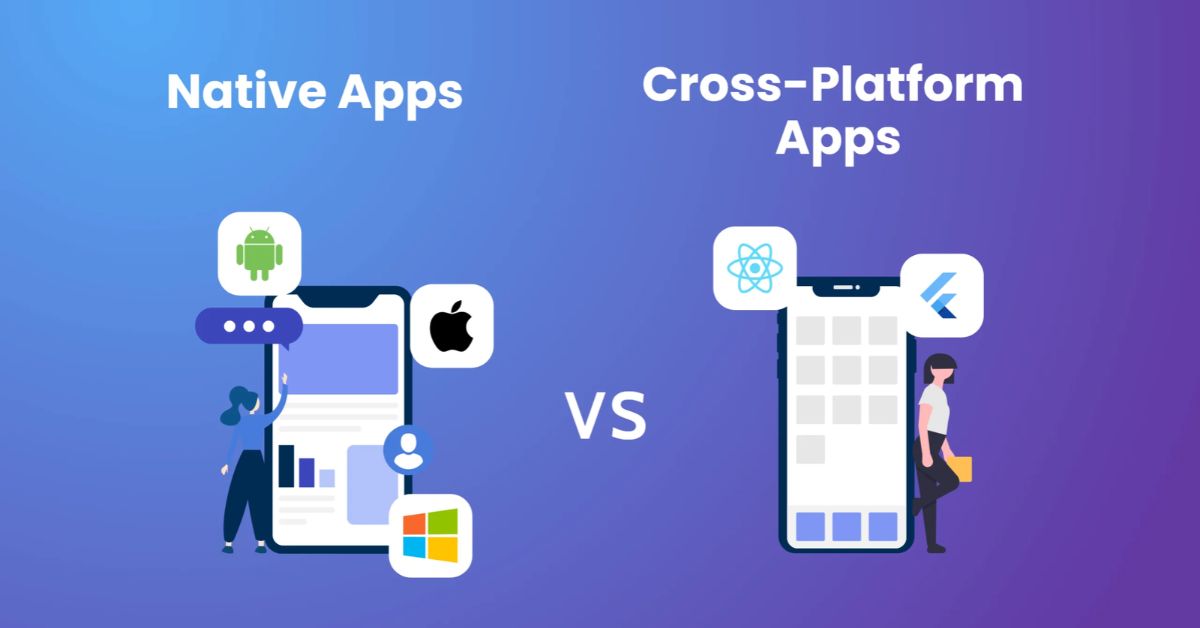
Native vs cross-platform app development comes down to one trade-off. Native apps are built separately for iPhone and Android, using each platform’s own language and tools, to get the best performance from both. Cross-platform apps share a single codebase that runs on both platforms, which gets a business to market faster and at a lower initial cost.
Both approaches produce successful apps. The right choice depends on what your app does, who uses it, and how much budget and time you have for the first release and the years of updates after it.
What Native Development Means
A native app is written in the language each platform’s maker recommends. iPhone apps use Swift and Apple’s SwiftUI framework. Android apps use Kotlin and Google’s Jetpack Compose.
Building this way gives your app three advantages:
- Immediate access to new features. When Apple or Google releases a new capability, such as a camera feature or a widget type, native apps can use it on day one.
- The smoothest performance. Native code runs directly on the platform, which matters for animation-heavy interfaces, real-time features and apps that process a lot of data on the device.
- Platform-correct design. iPhone users and Android users expect different navigation patterns and gestures. Native apps follow each platform’s conventions by default.
The cost is duplication. You build, test and maintain two separate apps, usually with developers who specialise in each platform.
What Cross-Platform Development Means
Cross-platform frameworks let one team write most of the app once and ship it to both stores. The two most widely used are Flutter, created by Google, and React Native, created by Meta.
The advantages are practical:
- One codebase for most of the work. Features, bug fixes and design changes happen once, which shortens timelines.
- One team. A single group of developers covers both platforms, which simplifies hiring and project management.
- Faster MVPs. For a business testing a new product, reaching both iPhone and Android users quickly is often worth more than platform-specific polish.
The trade-offs show up at the edges. New iOS and Android features reach cross-platform apps only after the framework adds support for them. Apps that lean heavily on device hardware, such as Bluetooth accessories, advanced camera processing or augmented reality, often still need native code written for each platform.
Five Questions That Decide It
Work through these with your team or development partner before you commit.
- Do you need both platforms at launch? If your customers are split across iPhone and Android and you need both from day one, cross-platform shortens the path.
- How much does the app depend on device hardware? Heavy use of sensors, Bluetooth, background location or AR points towards native.
- What are your budget and deadline? Cross-platform usually costs less for the first release. Native costs more up front and pays back in performance and flexibility.
- How much does polish matter to your users? Banking, healthcare and premium consumer apps live or die on trust and feel, and native builds give designers the most control.
- Who will maintain the app? Every app needs updates each year as Apple and Google release new operating system versions. Plan for the team that will handle them.
When Native Is the Right Call
Native development suits businesses whose app is the product itself, or a core part of how customers interact with them. Typical examples include:
- Fintech and banking apps, where security features and smooth performance build trust
- Health and fitness apps that connect to wearables and sensors
- Media, camera and AR apps that process images or video on the device
- High-traffic consumer apps where small performance gains affect retention
For these products, budget for two dedicated builds. A team offering iOS app development services works in Swift and SwiftUI and designs around Apple’s Human Interface Guidelines, which also helps the app move through App Store review smoothly. An experienced Android app development company builds in Kotlin and tests across the wide range of Android phones and tablets your customers actually use, from flagship devices to budget models.
When Cross-Platform Makes More Sense
Cross-platform development fits a different set of goals:
- MVPs and pilots that need to prove demand quickly
- Internal business tools for staff, where function matters more than platform-specific design
- Booking, marketplace and content apps built mostly on forms, lists and standard screens
- Products with a tight budget that still need to reach both iPhone and Android users
Many businesses start cross-platform, learn from real users, and then rebuild individual features natively as the product grows.
The Middle Path: Kotlin Multiplatform
Kotlin Multiplatform offers a third option. Developers share the business logic, such as accounts, payments and data handling, across both platforms, while each app keeps fully native screens. It suits teams that want native performance and design without writing every piece of logic twice.
Think Beyond the First Release
The cheapest app to build is rarely the cheapest app to own. When you compare quotes, ask each partner to estimate the cost of a typical year after launch, covering:
- Updates for new iOS and Android versions
- Bug fixes and security patches
- New features based on user feedback
- Monitoring, hosting and analytics
A native app means two update cycles. A cross-platform app means one codebase plus framework upgrades. Neither is automatically cheaper over three years, so get the numbers for your specific product.
Final Thoughts
Choose native when your app’s performance, hardware access or platform polish directly affects revenue or trust. Choose cross-platform when speed to market and budget matter most and your app runs mainly on standard screens. Either way, the decision works best when it’s made early, with a clear view of your users, your features and the years of updates ahead.