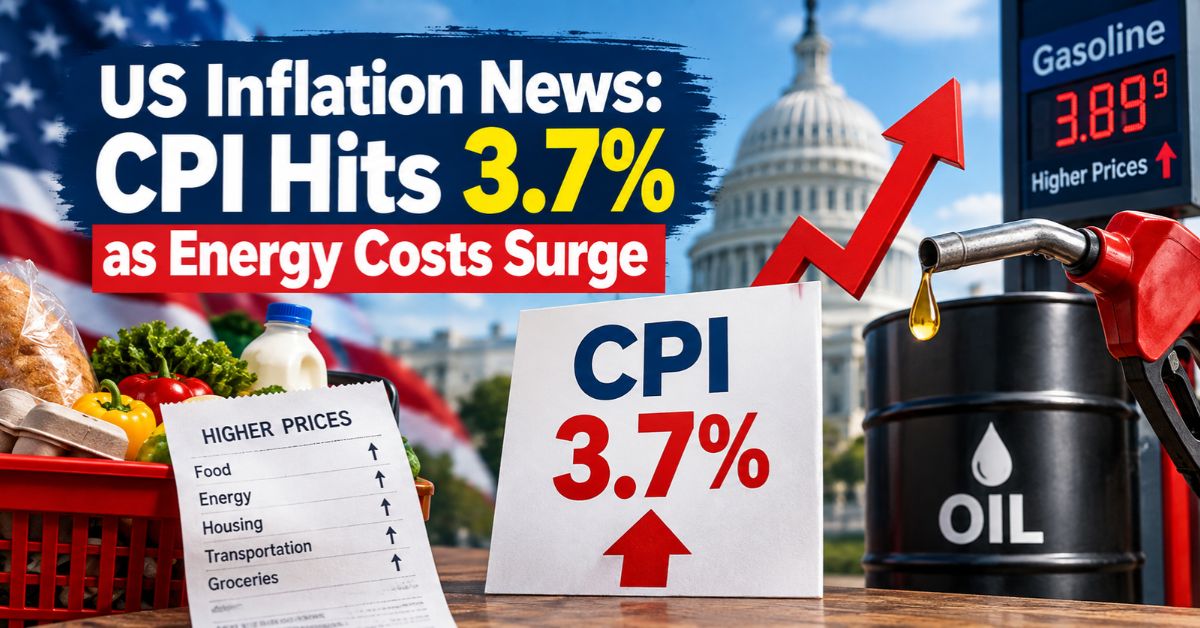
US Inflation News turned sharper this month. The Bureau of Labor Statistics reported that consumer prices rose 3.7% in September from a year earlier, up from 3.4% in August. Energy costs did most of the damage, and the report beat Wall Street forecasts. It landed days before the Federal Reserve meets and a week before the November 3 midterm elections. Here is what happened, why it matters, and what to watch next.
US Inflation News: What the September CPI Report Shows
Headline CPI rose 0.6% from August and 3.7% from a year ago. That is the fastest annual pace since May, according to market reports, and above the 3.6% economists expected. Gasoline prices jumped 9.1% in one month and drove more than half of the monthly gain, per CBS News. Airfares also climbed 22.4% year over year, and shelter and used-car costs added to the pressure.
Core CPI, which strips out food and energy, rose 0.3% on the month and 2.6% from a year earlier. That is well below the headline rate, yet still above the Federal Reserve’s 2% target. Economists watch core closely because it shows whether price pressure is spreading beyond fuel. So far, it is sticky rather than surging, and that stickiness is what keeps the Fed cautious.
| Measure | Latest reading | Why it matters |
|---|---|---|
| Headline CPI | 3.7% year over year; 0.6% monthly | Up from 3.4% in August |
| Core CPI | 2.6% year over year | Above the Fed’s 2% target |
| Producer prices | 6.3% year over year | Highest since December 2022 |
| Gasoline | Up 34.2% year over year | Largest single driver |
| Fuel oil | Up 74.2% year over year | Raises heating and shipping costs |
What is the current US inflation rate?
The current US annual inflation rate is 3.7%, based on the September Consumer Price Index from the Bureau of Labor Statistics. That is up from 3.4% in August. Core inflation, which excludes food and energy, is 2.6%. The next CPI report, covering October, will show whether the energy-driven jump continues or begins to cool. Check the BLS website for release dates.
Why Inflation Accelerated: Energy Prices Lead the Way
Energy drove this surge. Gasoline climbed 34.2% from a year ago, and energy overall rose 20.4%. Fuel oil jumped 74.2%, and diesel hit record highs, which raises shipping costs for almost every product on the shelf. Analysts link the spike to Middle East developments, while some say underlying price pressures remain tamer than the headline suggests. That mix of gasoline and diesel matters for consumers and businesses alike.
Producer prices show why this may not fade quickly. The Producer Price Index rose 1.3% in September and 6.3% from a year earlier. That is the highest annual reading since December 2022. Producer prices measure what businesses pay before goods reach stores. When those costs jump, retailers often pass some of the increase to shoppers over the following months. That is the upstream pressure economists keep flagging.
The main price drivers in this report:
- Gasoline and diesel costs
- Fuel oil and heating costs
- Airfares
- Shelter and used cars
- Higher business input costs
What Will the Federal Reserve Do This Week?
The Federal Reserve meets October 27–28, with Chair Kevin Warsh leading the discussion. Last month, the central bank raised rates by 25 basis points to a 3.75%–4.00% range. It was the first hike since 2023. Now traders mostly expect a pause. CME FedWatch data shows about 85% to 90% odds that rates stay put this week, though a December increase looks likely. The decision comes Wednesday afternoon.
Not everyone agrees. Some economists argue the Fed should hike now because core inflation keeps its momentum, and they say policymakers will ignore election timing to follow their mandate. Others prefer to wait for more data. Warsh declined to preview the decision this month, saying he does not prejudge meetings. That leaves room for a surprise, even if a hold is the base case.
| Scenario | What it would mean | How markets see it |
|---|---|---|
| Hold in October | Fed waits for PCE and other data | Base case, roughly 85%–90% odds |
| Hike in October | Rates rise 25 basis points to 4.00%–4.25% | Surprise, low odds |
| Hike in December | Fed acts after more inflation data | Widely seen as likely |
Will the Fed raise interest rates this week?
Markets say probably not. CME FedWatch data puts the odds of a hold near 85% to 90%, while a hike this week sits well below 20%. Economists expect the Fed to wait for PCE inflation data and then consider a December increase. Still, Chair Warsh gave no promise, so a surprise 25-basis-point hike remains possible. That is why Wednesday’s statement matters so much.
How Higher Prices Affect Your Wallet
Higher prices cut into real wages, which measure paychecks after inflation. When consumer prices grow faster than pay, the same salary buys less. Gasoline and diesel costs hit commuters directly. Diesel also lifts grocery, delivery and retail prices. Airfares, up 22.4% from a year ago, make travel pricier. Households with tight budgets, long commutes or little savings feel this first. Small changes add up over a month.
You cannot control inflation, but you can plan around it. Start with the categories that moved most, such as fuel, travel and groceries, and look for easy savings there. Review fixed bills too, since small cuts repeat every month. A short checklist helps you act instead of worrying, and it keeps your budget realistic when prices keep shifting. Here is a simple one.
- ☐ Track your fuel spending for two weeks
- ☐ Combine errands to cut driving
- ☐ Compare prices on groceries and delivery fees
- ☐ Delay non-urgent travel if fares are high
- ☐ Review subscriptions and recurring bills
- ☐ Build or protect a small emergency fund
Midterm Politics and the Inflation Debate
The report landed in the middle of a political fight. Midterm elections arrive November 3, and living costs have become a central campaign theme. Democrats are using high prices to target vulnerable Republican-held districts. Reports also describe independent voters as increasingly negative about economic management. For many campaigns, one number now carries political weight: the 3.7% annual rate that shoppers see at the pump and at checkout.
President Donald Trump promised to end inflation. Inflation sat near 3% at the start of his second term and now stands at 3.7%. Critics blame import tariffs, tax cuts and energy shocks for the rise. Analysts who focus on energy markets stress the Middle East’s role in the fuel spike. Economists still debate how much each factor matters, and that argument will likely continue well past Election Day.
What to Watch Next in US Inflation News
The next major data point is the Personal Consumption Expenditures price index. The Bureau of Economic Analysis releases it Thursday, and it is the Fed’s preferred inflation gauge. PCE usually runs a bit different from CPI because it uses different weights and covers more spending. A hot reading would strengthen the case for a December hike. A cooler one could ease some pressure.
Beyond PCE, track a few signals this week. Follow the Fed’s statement on Wednesday, the post-meeting press conference, and weekly gasoline and diesel prices. Watch wage data too, because real wages depend on pay growth versus inflation. Energy is the swing factor. If fuel prices cool, headline inflation could ease quickly. If they keep climbing, the pressure on budgets and on policymakers will grow.
How to read any inflation report in four steps:
- Compare the headline number with forecasts.
- Check core inflation for broader price pressure.
- Look at energy and food, the most volatile categories.
- Compare the monthly change with the prior month.
Conclusion
US Inflation News points in one direction for now: prices are rising faster, and energy is the main reason. Headline CPI hit 3.7%, core CPI held at 2.6%, and producer prices jumped 6.3%. Those numbers keep the Fed on guard and keep household budgets under strain. Core inflation remains above the 2% target, so the problem is not only fuel. Markets expect a hold this week and a likely hike in December.
The next few days will add clarity. The Fed decides Wednesday, PCE data arrives Thursday, and voters head to the polls November 3. Keep following US Inflation News from trusted sources such as the Bureau of Labor Statistics and the Federal Reserve. In the meantime, review your budget, cut avoidable fuel costs, and plan for prices that may stay high longer than you hoped.